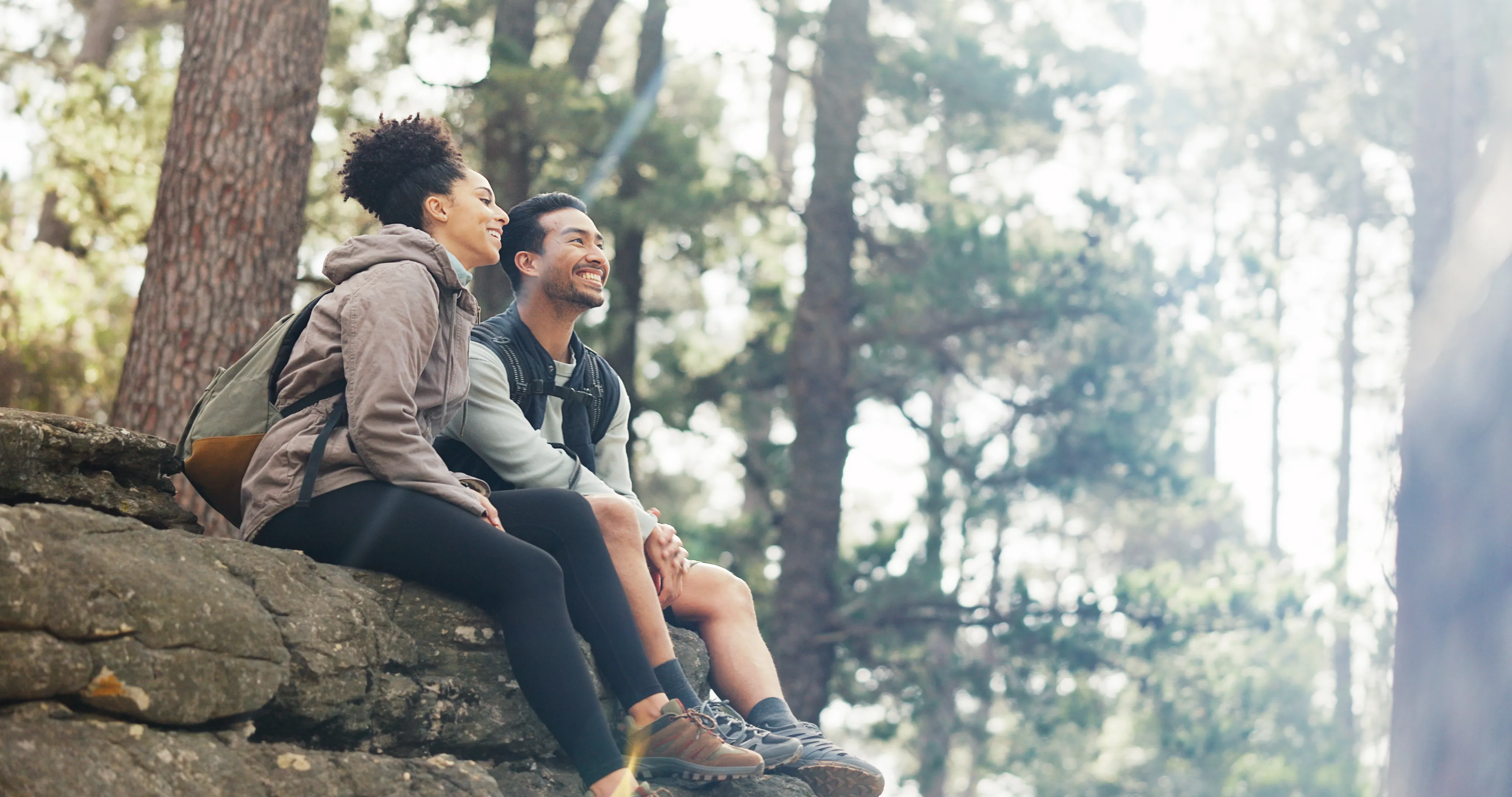
It’s easy to think of “going outside” as a nice mental break—more psychological than biological.
But a growing body of environmental psychology and physiology research suggests something more concrete: even short exposure to natural settings can measurably shift the body’s stress system.
One claim you’ll see repeated is that _around 10 minutes in nature can reduce cortisol by up to 25%_. That number isn’t a universal law, and it won’t apply to everyone on every day. But it points toward a real phenomenon: brief nature contact can coincide with meaningful changes in stress biomarkers.
What cortisol is (and what a change means)
Cortisol is a hormone released through the HPA axis (the hypothalamic–pituitary–adrenal system). It helps mobilize energy, regulate immune activity, and respond to demands.
A key nuance: cortisol is not “bad.” It’s supposed to rise and fall over the day (usually highest in the morning and lower at night). What people generally mean by “high cortisol” problems is _cortisol being elevated at the wrong times_ or a stress system that feels stuck in a higher-alert state.
So when a study observes cortisol decreasing after time in nature, that’s best interpreted as: the body moved toward a lower-arousal state during that window. It does _not_ automatically mean long-term stress resilience has improved, or that all stress-related symptoms will drop.
What the research says about short “nature doses”
A well-known study in _Frontiers in Psychology_ (often summarized as the “nature pill” study) tried to estimate a minimum “dose” of nature associated with measurable stress reduction. Participants took nature experiences in everyday life, and researchers tracked changes in salivary cortisol.
The main finding was not that nature works only at one magic minute-mark. It was that cortisol reduction was strongest when nature exposure fell in a roughly 20–30 minute window, and the slope of change was steep early on—meaning a lot of the benefit may happen sooner rather than later.
That steep early change is one reason shorter durations (like ~10 minutes) keep showing up in public summaries and practical interpretations: you may not need an hour-long hike to see a physiological shift.
At the same time, we should be honest about what’s being measured:
- These studies typically look at _acute_ changes (before vs. after), not whether people are “less stressed” weeks later.
- Cortisol is variable and context-sensitive (sleep, time of day, caffeine, recent exercise, infection, menstrual cycle phase, and more can all move it).
- “Nature” isn’t a single thing. A quiet park bench, a busy urban greenway, and a forest trail can produce different experiences.
The nervous system angle: why nature can feel like a reset
A practical way to frame this—without overstating certainty—is nervous system state.
When you’re stressed, your body tends to shift toward sympathetic arousal (“fight or flight”): higher alertness, tighter attention, more scanning for threats, and often more internal mental noise.
Many natural environments seem to do the opposite: they reduce demand, reduce informational load, and provide sensory patterns that feel less threatening and more predictable (light, wind, leaves moving, distant sounds). In that state shift, cortisol can drop as part of a broader downshift in stress physiology.
This is still an interpretation, not a proven single mechanism. But it fits the consistent observation across studies that nature exposure can reduce markers of stress.
“Up to 25%” — how to think about a headline number
“Up to” is doing a lot of work.
A 25% reduction can be real in a specific sample, under specific measurement timing, compared to that person’s baseline at that time of day. It doesn’t mean:
- everyone will see 25%
- 10 minutes always produces the same effect
- the effect persists long after
A more truthful takeaway is:
Short periods of nature exposure can be enough to produce measurable changes in stress biology for many people, and the early minutes may be disproportionately impactful.
What’s still uncertain (and what would strengthen the story)
The evidence for acute stress reduction is fairly consistent, but key questions remain:
- Dose-response precision: How does the curve look for different people—10 vs. 20 vs. 45 minutes—and in different environments?
- Which environments matter most: forest vs. park vs. backyard vs. “blue space” (water).
- Long-term outcomes: Do small daily reductions compound into better sleep, lower anxiety symptoms, or improved cardiometabolic markers over months?
- Causality in the real world: When people choose to go outside, they may also be doing other helpful things (moving more, taking breaks, socializing less, breathing differently).
A grounded way to apply this (without turning it into a lifestyle rule)
If you’re curious, treat nature exposure like an experiment in state change:
- Try 10–20 minutes outside in a greener, quieter place than your usual route.
- Don’t multitask if you can avoid it. Let it be a genuine downshift.
- Pay attention to a simple signal: _Do you feel more settled, or more activated, afterward?_
If it helps, great. If it doesn’t, that’s information too.
The simplest point is also the most reliable: your stress system is responsive to environment, and even small changes in setting can show up in the body.
Sources
- https://pmc.ncbi.nlm.nih.gov/articles/PMC6970969/
- https://www.vet.cornell.edu/about-us/news/20200225/spending-time-nature-reduces-stress-and-anxiety
- https://www.hallcounty.org/DocumentCenter/View/14451/The-Power-of-Nature_Benefits-of-being-outside
- https://www.meduniwien.ac.at/web/en/ueber-uns/news/2025/news-in-may-2025/spending-time-in-the-forest-reduces-stress-in-just-20-minutes/
- https://mashable.com/article/nature-pill-stress-mental-health