“Processed food” is a messy term. Almost everything you can buy has been processed in some way—washed, frozen, canned, pasteurized, ground, fermented. Some of that processing protects safety and makes healthy food easier to access.
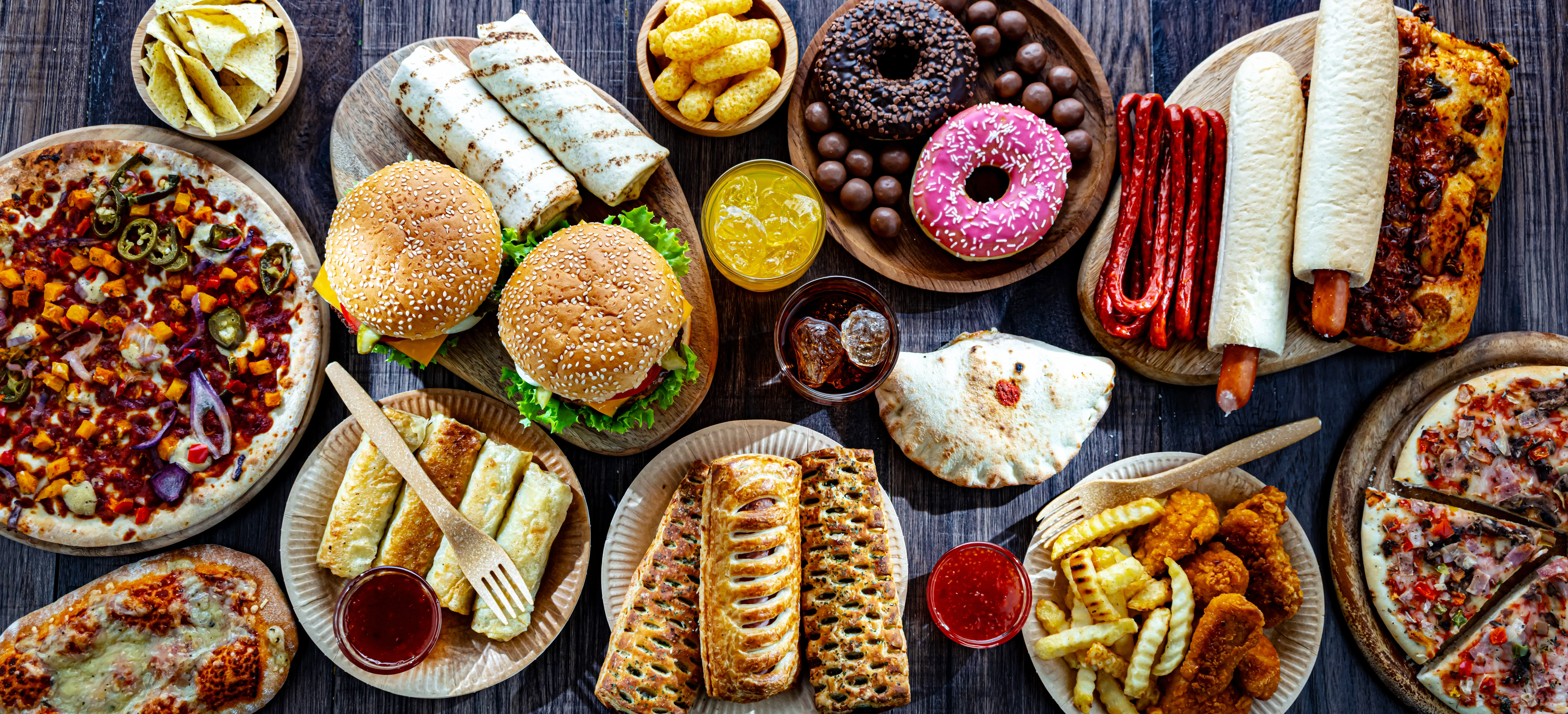
The real controversy is about ultra-processed foods (UPFs): products made mostly from refined ingredients and additives, designed to be extremely convenient, hyper-palatable, and shelf-stable (think many packaged snacks, sugary drinks, instant meals, reconstituted meat products, and many sweetened cereals).
Below is what researchers and public health groups generally think UPFs do inside the body—and what remains uncertain.
1. They tend to push calorie intake up (without you noticing)
One of the most consistent observations is behavioral and physiological: when people eat diets dominated by ultra-processed foods, they often end up eating more total calories.
Why might that happen?
- Texture and “ease of eating.” Many UPFs are soft, low in fiber, and quick to chew and swallow, which can increase eating rate. Faster eating can reduce the time your satiety signals (stretch, gut hormones) have to “catch up.”
- High reward value. UPFs are often formulated to maximize taste and repeatability (sweet/salty/fat combinations), which can override normal appetite regulation.
- Lower protein and fiber density in typical UPF patterns. Protein and fiber are both strongly linked to fullness; many UPF-heavy diets are relatively low in both, even if they’re not always low.
Important nuance: this doesn’t mean every packaged food is overeaten. It means diet patterns dominated by UPFs make passive overconsumption easier, for many people.
2. They can worsen blood sugar dynamics indirectly (and sometimes directly)
Ultra-processed diets often contain more refined starches and added sugars and less intact fiber. That combination tends to:
- raise post-meal glucose more quickly
- increase insulin demand
- make it easier to drift toward weight gain (which itself worsens insulin sensitivity)
This is not purely about “carbs are bad.” It’s about form and context:
- An intact food (like beans or oats) packages carbohydrate with fiber and structure, slowing digestion.
- A refined product (like many crackers, pastries, or sugary drinks) delivers carbohydrate in a form that is easier to absorb quickly.
Also, people often replace minimally processed foods with UPFs, which can reduce overall diet quality and make glucose control harder over time.
What we can say with confidence: UPF-heavy patterns are associated with higher risk of metabolic disease in population studies. What we can’t always prove from observational data alone: exactly how much is driven by calories/weight gain versus specific ingredients or additives.
3. They crowd out nutrients and fiber (even when calories are high)
A common “processed food paradox” is feeling both overfed and undernourished.
UPFs often deliver:
- lots of energy (calories)
- fewer naturally occurring micronutrients
- less fiber
Many countries fortify certain refined foods, which helps prevent some deficiencies. But fortification doesn’t fully recreate what’s lost when you remove a food’s original structure—especially fiber and diverse plant compounds.
The practical result is that an UPF-heavy diet can make it harder to get enough fiber and can reduce dietary diversity—two factors consistently associated with better long-term health.
4. They’re linked to higher risk of chronic disease (association, not proof)
Large prospective cohort studies (which follow people over time) repeatedly find that higher UPF intake is associated with increased risk of multiple outcomes (often including cardiovascular disease, type 2 diabetes, and all-cause mortality). A 2024 systematic review and meta-analysis of prospective cohorts reported that UPF intake was associated with higher risk for several adverse health outcomes.
A key limitation: cohort studies can’t fully eliminate confounding. People who eat more UPFs may also differ in sleep, stress, income, activity, smoking, access to healthcare, and many other variables.
Still, when a signal appears across many cohorts and settings, it becomes harder to dismiss—especially when there are plausible mechanisms (higher calorie intake, lower fiber, higher refined carbs, etc.).
5. Additives and packaging: plausible concerns, still being clarified
UPFs often contain emulsifiers, sweeteners, colorants, flavorings, and other additives. Some researchers hypothesize these could affect the gut microbiome, inflammation, or appetite in certain contexts.
Here’s the honest state of play:
- There are plausible mechanisms, and some experimental evidence exists for specific additives.
- But “UPF harm” is not proven to be primarily about additives. A lot of the risk signal could be explained by energy density, low fiber, refined ingredients, and displacement of whole foods.
So the most defensible framing is: additives may matter, but we shouldn’t ignore the simpler explanations that already account for much of the observed risk.
6. Not all processing is harmful—and some is beneficial
Processing exists on a spectrum.
Examples of processing that often helps health (or at least doesn’t inherently harm it):
- freezing fruits and vegetables
- canning beans or fish
- pasteurizing milk
- fermenting yogurt
- milling and drying grains (with tradeoffs)
Even some foods that look “processed” on the shelf can be health-supportive in practice—depending on ingredients and overall diet pattern.
The more reliable question isn’t “Is it processed?” but:
- How much of your diet is ultra-processed?
- Does it displace fiber-rich, minimally processed foods?
- Does it make it harder for you to regulate appetite and body weight?
A grounded way to think about it
If most of your intake comes from ultra-processed products, the body tends to experience a predictable pattern:
- easier overeating → gradual weight gain for many people
- lower fiber and lower dietary diversity
- more frequent glucose spikes for many diets
- higher long-term cardiometabolic risk in population data
But there’s no single “toxin story” that explains everything. UPFs are a category of modern foods that tend to share features that push human biology in an unhelpful direction.
If you want a simple mental model: the further a food gets from its original structure, the easier it often becomes to overconsume—and the harder it becomes for the body to regulate intake naturally.
Sources
- https://nutritionsource.hsph.harvard.edu/processed-foods/
- https://publichealth.jhu.edu/2025/what-are-ultra-processed-foods
- https://studypages.com/blog/how-much-is-too-much-ultra-processed-foods-and-your-body/
- https://www.sciencedirect.com/science/article/pii/S2161831323013820
- https://ysph.yale.edu/research/information-sheets/ultra-processed-foods/