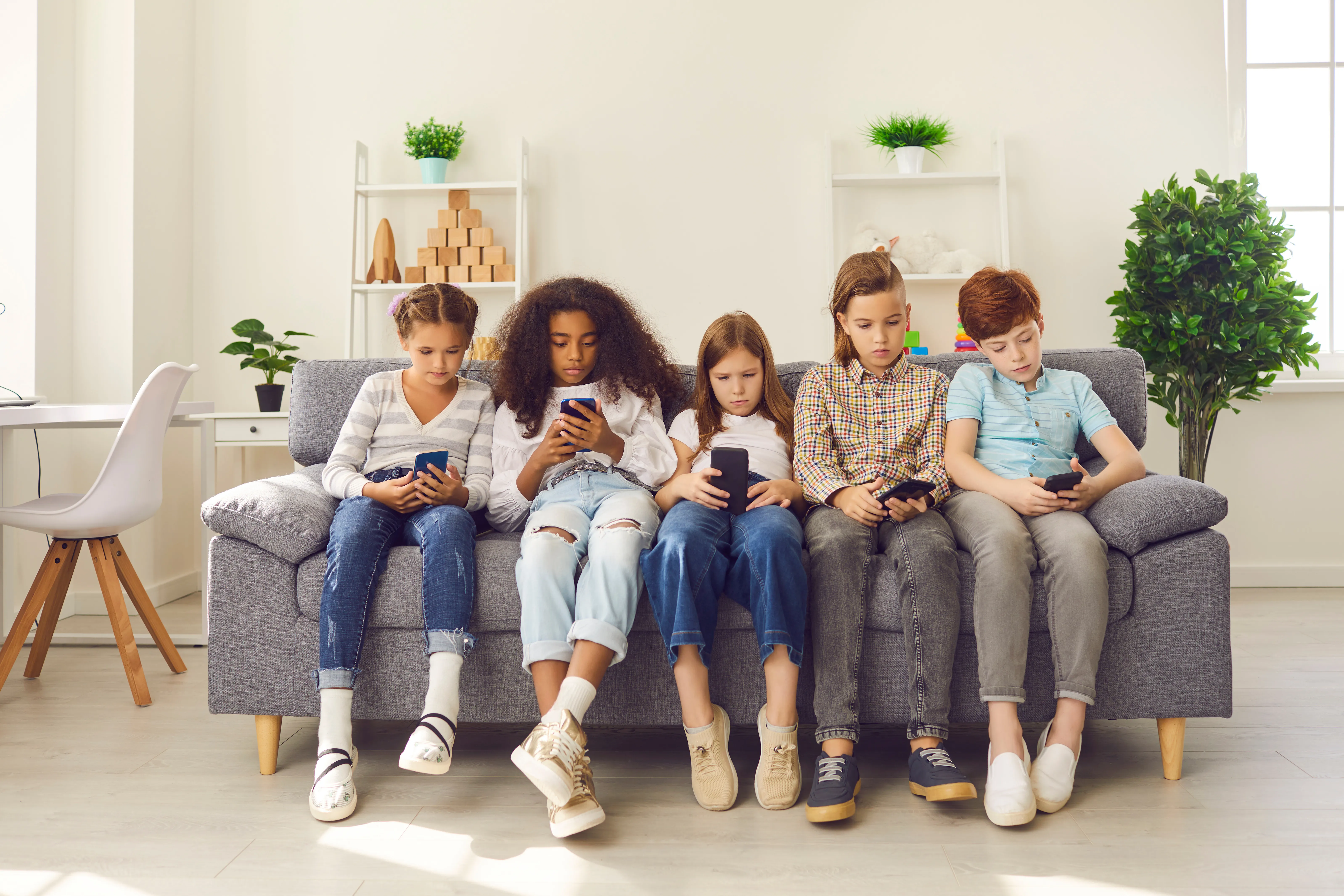
A practical way to interpret “7–9 hours/day” is: for some kids, screens can take up as much time as school plus homework.
What research most consistently shows is not that every hour is equally harmful, but that higher screen time—especially very early in life—tends to correlate with outcomes like weaker language/communication milestones and poorer sleep. For example, a large Japanese cohort study found higher screen time at age 1 was associated with increased odds of developmental delay in communication and problem-solving at ages 2 and 4 (an association, not proof of causation). Reviews also summarize links between heavy screen exposure and sleep disruption and other developmental concerns, while emphasizing that family context and what’s on the screen matter.
What this number can’t tell you by itself
- Whether the child is watching passive entertainment vs. video chatting with family, learning content, or co-viewing with a caregiver.
- Whether screen time is displacing sleep, outdoor play, reading, or face-to-face conversation (often the key pathway researchers worry about).
- Whether screens are a cause, a coping tool, or both in a household under stress (a major confounder in observational studies).
Sources
- https://jamanetwork.com/journals/jamapediatrics/fullarticle/2808593
- https://pmc.ncbi.nlm.nih.gov/articles/PMC10353947/
- https://www.jmir.org/2025/1/e68009
- https://www.cedars-sinai.org/newsroom/back-to-school-how-screen-time-affects-childrens-developing-brains/
- https://acpeds.org/media-use-and-screen-time-its-impact-on-children-adolescents-and-families/